Treasurer touts pricing flexibility allowances in call with industry leaders
STATE HOUSE, BOSTON, Sept. 17, 2026…..Treasurer Deb Goldberg accused President Donald Trump of playing a “game” with tariffs Wednesday, as she joined alcoholic beverage business leaders in detailing the instability in their industry that could impede tax revenues.
Tariffs Disrupt Alcohol Industry Costs And Supply Chains
Trump has reshaped U.S. trade policy in his second term, with threatened and levied tariffs resulting in retaliatory actions from abroad — leaving American businesses scrambling to stabilize their supply chains and absorb skyrocketing costs.
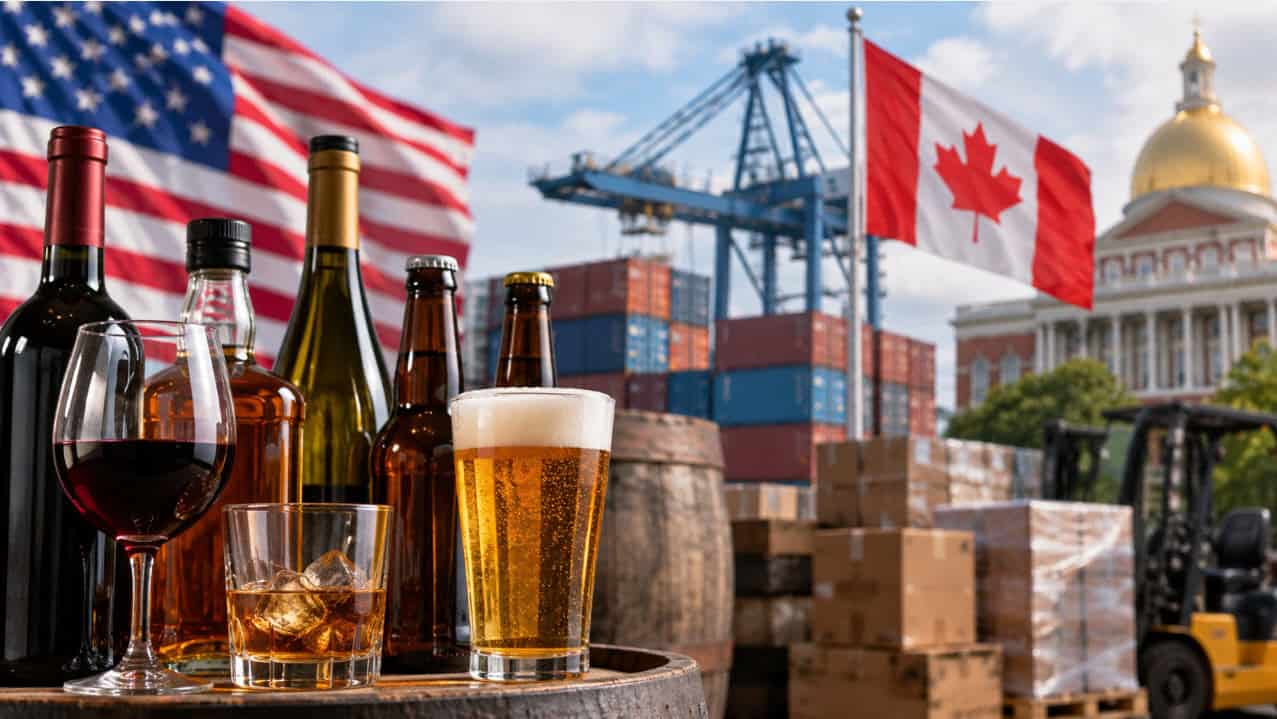
Most recently, the U.S. and Canada are embroiled in an escalating trade war over various goods, including alcohol products. Trump in July announced a 50% levy on Canadian imports in response to “Canada’s discriminatory treatment of American products,” according to the White House. After Canada retaliated — with the premier of Saskatchewan imposing a reciprocal tariff on U.S. alcohol products — Trump said he would ban the import of certain Canadian alcoholic beverages starting on Sept. 29.
“I feel that this whole tariff thing is a game. And it’s a game that is risking people’s lives in the sense — it’s risking their livelihoods,” Goldberg said during a press call hosted by For the Long Term, a nonprofit that supports state and municipal financial leaders.
The treasurer’s office oversees the Alcoholic Beverages Control Commission, a point of contention on the campaign trail as Goldberg faces a challenge from Republican candidate Elizabeth Dionne this November. Dionne has publicly accused Goldberg of allegedly engaging in a “pay to play” scheme with the ABCC — though she has not offered evidence — and “fundraising off the businesses she is supposed to regulate.”
In a social media video in July, Dionne criticized Goldberg for hosting a fundraiser with House Speaker Ron Mariano, as well as the Wine & Spirit Wholesalers of Massachusetts and Beer Distributors of Massachusetts.
Dionne again raised pay-to-play allegations against Goldberg during an appearance on WCVB’s “On the Record” show over the weekend and said that Goldberg has accepted over $100,000 in donations from industries that she “directly controls.” But when pressed whether she has any pay-to-play evidence, Dionne replied, “We are working on that right now.”
“I’m not prepared to say that it’s happening, but we’ve had multiple people say that it is, and that we need to look into it,” Dionne continued. “So we are trying.”
Chris Keohan, a senior advisor to Goldberg’s campaign, said “of course” a pay-to-play scheme isn’t happening.
“There’s over 50,000 licenses issued by the ABCC,” Keohan told the News Service Wednesday. “It’s pretty clear that a couple dozen donations do not equate even remotely close to pay to play.”
ABCC Pricing Flexibility Helps Suppliers Respond
During the press call, Goldberg discussed her efforts to mitigate turmoil for alcohol suppliers and manufacturers, drawing praise from business leaders with Massachusetts ties.
“We are doing everything we can do to support our businesses,” Goldberg said. “Normally, out-of-state alcohol suppliers must submit their prices to the commission no later than the first day of the prior month to be in effect for the next month. Recognizing how difficult it is for them to actually be able to do that, we have developed flexibility and trying to support them.”
Suppliers may request permission to change their prices immediately, Goldberg said, rather than operating under the typical notification schedule.
Massachusetts Distributors Cite Tariff Pressures
Chris Conrad, president of New England alcohol distributor Martignetti Companies, said the tariffs have led to reduced earnings, with financial pressures also being passed down to suppliers, restaurants, retailers and consumers. Conrad said the ABCC and Goldberg have been “incredibly flexible and supportive of working with us to accommodate the fact that these tariffs are changing unexpectedly.”
“That allows us to make changes as we need on the fly, literally with no day’s notice,” Conrad said. “And we’re grateful for their partnership in that regard.”
Steel And Aluminum Tariffs Add To Industry Costs
Trump in June 2025 raised steel and aluminum tariffs to 50%, adding strain to the craft beer industry. The Brewers Association, a trade group that represents small and independent craft brewers, estimated that aluminum cans represented 75% of packaged craft beer’s volume and revenue based on early 2025 sales data. Steel tariffs are also raising costs for kegs and brewhouses, according to the Cato Institute.
Scott Allen, vice president of wine and spirits importer and distributor M.S. Walker, said his company is deciding to stop manufacturing certain products since consumers “just will not tolerate these price increases.” He thanked Goldberg, saying she listens to “our concerns day in and day out” and is able to “efficiently act on some of our decisions and some of our requests.”
Goldberg emphasized the tiered nature of the alcoholic beverage industry, with tariffs sparking cascading effects on distributors, manufacturers, retailers and local communities.
“Quite often these retailers are a core part of local revenue sources, and the alcoholic beverages industry also pays an enormous amount of taxes and employs a lot of people,” Goldberg said. “So overall, as state treasurer, I am also very worried about general revenues coming into the state and us being able to sustain the job that government has to do.”