Agents Continue to Outperform in Resolving Customer Issues Says Latest JD Power Study
A ‘seamless experience’ now outweighs virtually every other factor, according to the JD Power 2026 U.S. Auto Insurance Study SM, having become the single-most impactful driver of satisfaction in the study, essentially. Customers who can move easily between digital platforms, call centers, and agents report substantially higher satisfaction levels than those forced to switch channels repeatedly to resolve a single inquiry.
“The market has clearly shifted from a pricing crisis to an experience challenge. said Stephen Crewdson, managing director of insurance business intelligence at JD Power. “Rates are stabilizing, but many customers still say their interactions aren’t seamless—especially when they must switch channels to resolve a single inquiry—even as a seamless cross-channel experience has become the single-most impactful driver of satisfaction in the study.
Now in its 27th year, the U.S. Auto Insurance Study measures customer satisfaction with auto insurers based on performance across seven core dimensions, using a poor-to-perfect rating scale. The following are the major highlights from this year’s results.
Seamless Service Remains a Customer Frustration
Despite insurers’ investments in digital platforms, many customers continue to experience frustration when seeking service. JD Power found that 46% of customers interacted with their insurer through multiple channels during the past year. Satisfaction declined significantly, however, when customers were required to switch between channels—such as a website, mobile app, call center, or agent—to resolve a single issue.
More than one-fifth of customers (21%) reported experiencing these forced cross-channel interactions. Those customers reported lower satisfaction levels and were less likely to renew their policies, underscoring JD Power’s conclusion that a seamless cross-channel experience has become the most important driver of customer satisfaction.
Agents, However, Lead in Resolving Cross-Channel Customer Issues
In a bright spot for agents, the study highlighted the continuing value of independent agents in resolving customer issues. While insurers increasingly encourage customers to use digital channels, JD Power found that agents achieved the highest success rate when customers needed help navigating multiple service channels.
In fact, the study noted that once an agent became involved, 91% of cross-channel inquiries were successfully resolved. In contrast, resolution was lowest when inquiries were directed to insurer websites, with only 66% ultimately resolved. The findings suggest that even as carriers expand digital self-service options, agents continue to play a critical role in helping customers resolve complex issues and complete transactions that begin in one channel and end in another.
AI Is Becoming a Competitive Factor in Auto Insurance Shopping
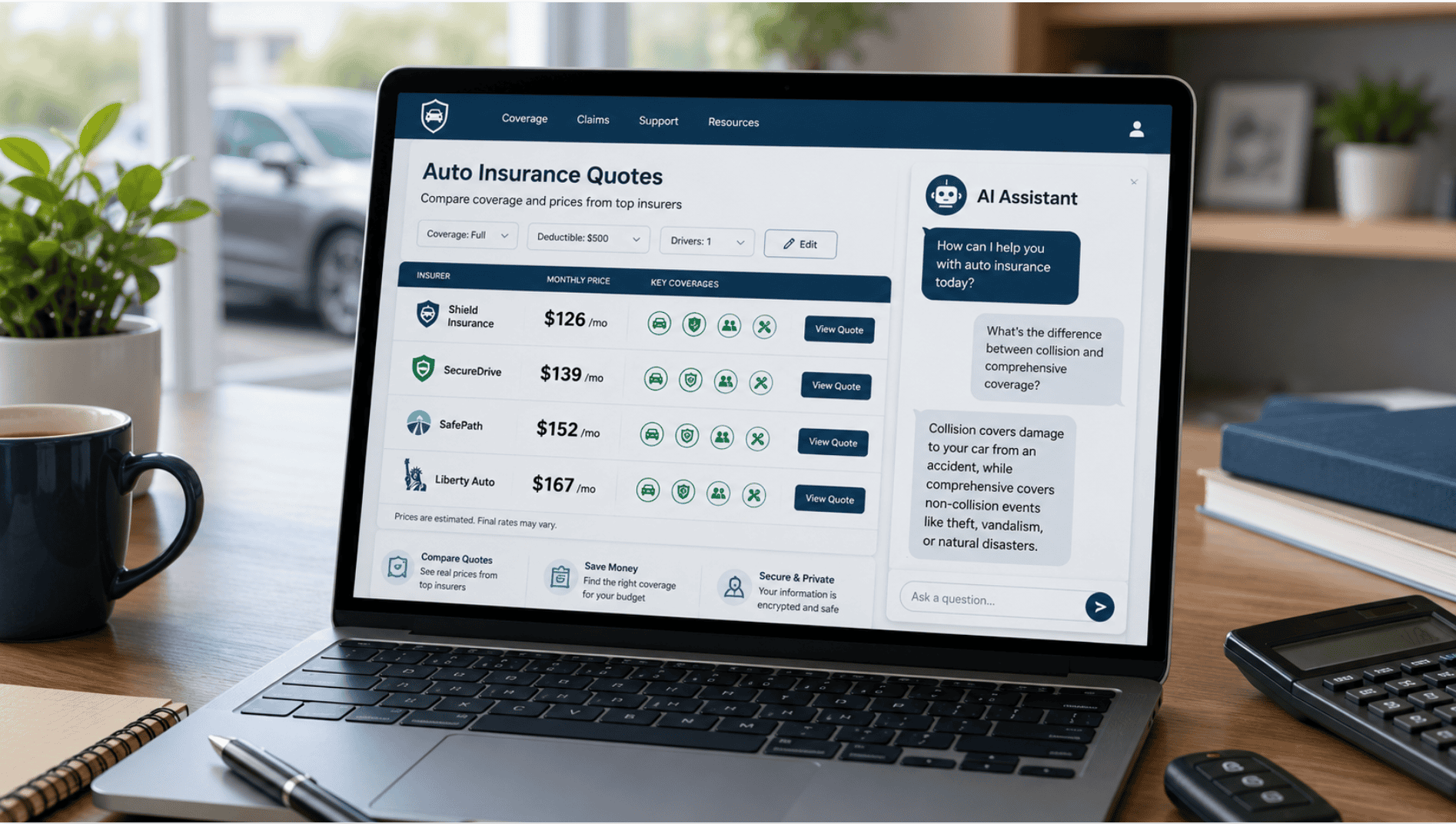
One of the study’s most consequential findings for insurers and agents may be the growing role of artificial intelligence in the shopping process. JD Power found that nearly one-third (32%) of auto insurance shoppers now use AI tools when comparing coverage, and those consumers are more than 30% more likely to switch insurers.
As for what consumers used AI for, the survey said consumers most commonly used AI tools to ask general insurance questions, compare policies, obtain quotes, and assist with purchasing decisions.
Interestingly, shoppers who used AI were more than 1.3 times as likely to switch insurers as those who did not. The findings suggest customers increasingly seek information outside traditional insurer and agency channels when evaluating coverage options. However, one-third of AI users (33%) said the information generated by AI tools was not helpful.
Fewer Customers Fully Understand Their Coverage
Mirroring other recent studies, the JD Power survey also found that only 58% of consumers said they completely understand their auto insurance policy and what it covers, down four percentage points from the 2025 study. Moreover, the survey evidenced a strong correlation between policy understanding and overall customer satisfaction. Customers who fully understood their coverage scored 127 points higher in overall satisfaction than those who did not. Policy understanding also had a substantial effect on perceptions of value, increasing satisfaction with price by 141 points.
The findings suggest that helping customers understand their coverage remains one of the most effective ways for insurers and independent agents to improve satisfaction, strengthen retention, and differentiate themselves as consumers increasingly turn to artificial intelligence tools for insurance information and policy comparisons.
Why This Matters to Massachusetts Agents and Insurers
For Massachusetts insurance professionals, the significance extends beyond technology adoption.
Traditionally, carriers, agency websites, producers, and customer service representatives controlled much of the information flow during the insurance shopping process. JD Power’s findings show AI is changing how many consumers source their information. Many are increasingly looking to AI Platforms for coverage explanations and policy comparisons and/or insurance quotes prior to speaking with either an agent or insurer.
With that said, the highest consumer satisfaction still comes from a seamless experience and from issues being resolved in one channel. Personal touch and proactive help continue to trump technology and is something agents still outperform on as compared to technology and AI – at least for now.