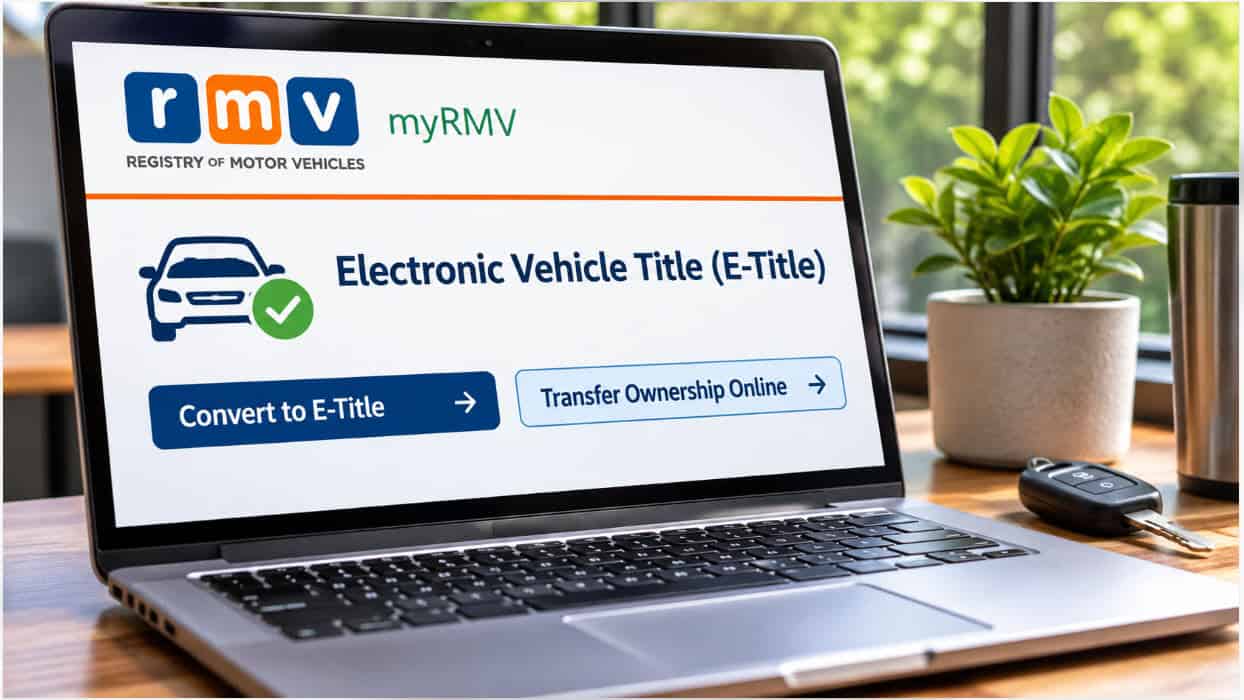
New system permits electronic title transfers for eligible private vehicle sales, but insurance certification, and registration procedures remain in place.
The Registry of Motor Vehicles (RMV) has begun rolling out the first phase of its Electronic Vehicle Certificate of Title (E-Title) initiative. The new system allows Massachusetts residents to transfer ownership of a vehicle electronically, eliminating the need to exchange a paper certificate of title.
“The implementation of electronic titles is the first step in a multi-stage effort to give customers a safe and convenient way to maintain their vehicle title without having to store and protect a paper document,” said Registrar of Motor Vehicles Colleen Ogilvie. “This first phase will enable electronic ownership transfers for eligible private vehicle sales between Massachusetts residents. Both the seller and buyer will verify their identities and the vehicle’s ownership through the RMV, helping ensure the accuracy of the next vehicle title issued.”
The first phase of the RMV’s E-Title initiative came into effect on October 26, 2026, and permits online ownership transfers for qualified private sales between Massachusetts residents. The RMV formally announced the launch of the initiative on November 9th.
How Massachusetts RMV E-Title Transfers Work
The new system is currently available for eligible private sales between Massachusetts residents. In order to take advantage of the E-Title program, both buyer and seller must have a MyRMV account. First-time myRMV users also need a Verification Letter ID, says the RMV, which can be requested online and mailed within seven business days or printed the same day at an RMV Service Center.
The seller must have an E-Title or first convert an existing paper title to an E-Title prior to conducting a transfer. When an eligible owner requests conversion to an E-Title, the electronic record will serve as the official certificate of title and proof of vehicle ownership. No paper title will be printed or mailed. Customers may convert titles between electronic and paper formats as needed for a $25 fee per conversion.
Paper titles will remain the default form of title issuance. Vehicle owners who are not planning to sell their vehicle do not need to take any action.
Insurance Agents Continue to Verify Ownership and Coverage
While independent insurance agents may have concerns about this new initiative, the RMV has emphasized that the new process does not eliminate their role. Vehicle registration, including obtaining plates, remains unchanged. In-person visits and insurance coverage confirmation by an insurance agent’s stamp are still required.
RMV Issues E-Title Processing Guide for Insurance Agents
With that said, the RMV notes that insurance agents will be required to handle E-Title transactions differently. To aid agents in learning the new process, the RMV issued the Insurance Agent Electronic Vehicle Certificate of Title Processing Job Aid, published on October 16, 2026, including two scenarios insurance agents will likely encounter while handling vehicle registrations involving an E-Title.
Scenario 1: Customer has completed E-Title transfer and wants to do registration and titling
In this example, the buyer provides an agent with an E-Title Transfer Confirmation from their MyRMV portal proving E-TItle is complete and ownership of vehicle has been transferred. After in-person verification of the E-TItle and digital confirmation of buyer’s ownership of the vehicle, the agent completes and stamps the RTA form.
Scenario 2:: Customer has completed E-Title transfer, done title only transaction online, and
wants to register vehicle
In this example, the buyer provides confirmation of the online title application to an insurance agent. The RMV says an agent can then process the registration on EVR using the Title Add Registration (TAR) transaction once the service provider implements the transaction, which is planned for Phase 2.
Until the Service Provider implements the Registration Only transaction, agents should follow the process outlined in the guide.
The RMV’s processing guide gives step-by-step instructions for agents in each of these scenarios. A copy of the guide can be accessed below.
Dealership and EVR Expansion Targeted for Spring 2027
Dealership sales and trade-ins are excluded in the first phase of the E-Title initiative. A second phase, targeted for spring 2027, is expected to expand electronic title capabilities to dealerships participating in the Electronic Vehicle Registration program.
The RMV says that customers with E-Titles who wish to sell or trade their vehicles to dealerships may request paper titles.
New Title Numbers and Ownership Checks Address Fraud Risks
The main objective of the new E-Title initiative is to help reduce the risks associated with lost paper titles and fraudulent ownership transfers. To this end, the RMV outlined the measures it has taken to protect E-Titles. Each conversion between electronic and paper formats generates a new title number and voids all previous versions. Only the most recently issued title is valid.
Title information will continue to be reported to the National Motor Vehicle Title Information System, the federal database that helps protect consumers from vehicle fraud.
“This new electronic title option is an important step in modernizing the services we provide to Massachusetts residents and making vehicle transactions more secure, convenient, and efficient,” said Interim Transportation Secretary and MBTA General Manager Phillip Eng. “By reducing reliance on paper documents, we can help protect customers from lost titles and fraud while creating a foundation for a more seamless vehicle ownership process in Massachusetts and, eventually, across state lines.”