Urges DPU to table new rules until drivers get contracts with Uber, Lyft
STATE HOUSE, BOSTON, May 26, 2026….Fresh off becoming the nation’s first certified union for app-based drivers, Massachusetts rideshare workers are already flexing their new bargaining power — urging state regulators to halt proposed industry rules until the union can negotiate its first contract with Uber and Lyft.
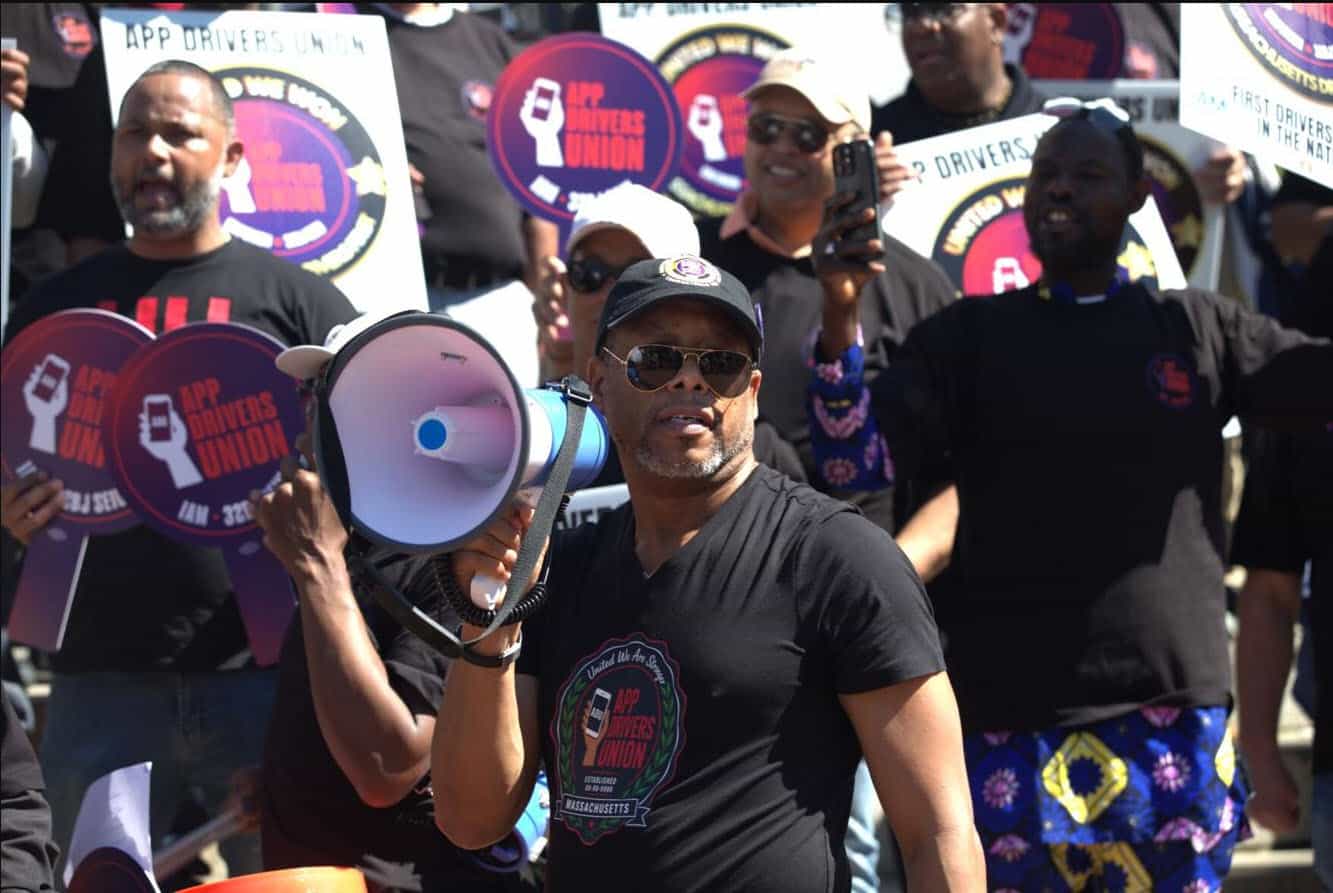
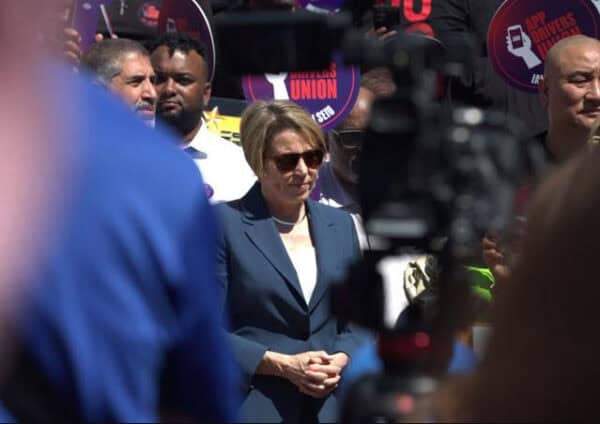
The App Drivers Union was certified Friday by the Department of Labor Relations to represent roughly 70,000 Massachusetts rideshare drivers. They rallied on the State House steps Tuesday alongside Gov. Maura Healey and national labor leaders to celebrate what organizers called a landmark moment for gig workers nationwide.
“You guys made history,” Healey told drivers gathered outside the State House. “You’re the first in the United States to be a unionized rideshare driver union, and this changes the game.”
Driver and founding union member Albert Potter framed the certification as the culmination of years of organizing against companies that long resisted unionization efforts.
“A few days ago, ADU was still no more than a dream,” Potter said. “Today we proudly say, ‘Suck it up, buttercup. We won.'”
Potter said the union’s priorities include “fair pay” and “stopping unfair deactivations.”
Uber, in a statement responding to the union certification, said it would “work closely with the ADU” while seeking to preserve “driver flexibility and hard-won benefits.” Lyft said the company is “committed to engaging in good faith” and would remain “focused on helping drivers succeed while keeping rideshare affordable and dependable.”
New DPU Regulations Face Pushback From Drivers
Behind the celebration, however, a regulatory fight is already brewing with another arm of the Healey administration: the Department of Public Utilities, which is advancing extensive new regulations governing app-based drivers and rideshare companies.
The proposals, unveiled in April, would significantly overhaul rideshare oversight rules while also implementing a 2022 climate law aimed at electrifying rideshare fleets.
The package would expand background checks and documentation requirements for drivers, require annual safety and professional driving training, create new mandatory disqualifications for certain driving and criminal offenses, limit drivers to 12 total hours of work in a 24-hour period, ban surge pricing during declared emergencies, and require rideshare apps to include enhanced rider safety features like emergency access and trip-sharing capabilities.
Another proposal would require rideshare companies to submit plans detailing how they would increase electric vehicle usage and reduce greenhouse gas emissions. One year after final regulations take effect, all vehicles owned or leased directly by rideshare companies would need to be zero-emission vehicles, with exemptions for paratransit and wheelchair-accessible vehicles. The regulations would also require companies to create financial support programs for lower-income drivers transitioning to electric vehicles.
App-Based Drivers’ Union Says Contract Talks Should Come First
Union leaders say the proposed rules should be paused until a contract is negotiated under the 2024 ballot law voters approved 18 months ago.
Collective bargaining has not yet started, and neither union leaders nor Uber on Tuesday gave an exact timeline to begin negotiations. Under the 2024 law, once talks begin, the union and companies have six months to reach a contract or move into arbitration.
In a May 17 filing with the DPU, the App Drivers Union argued the proposed regulations “will cast a shadow over the negotiations, creating uncertainty and limiting the ability of the parties to bargain productively.”
The union also wrote that the regulations could give rideshare companies “unfair advantages in negotiations” because they could cite pending state rules “as a reason why they cannot agree to certain proposals.”
Autumn Weintraub, executive director of the App Drivers Union, said Tuesday the organization is not opposing regulation outright, but wants the DPU to coordinate with labor negotiations rather than create overlapping systems.
“The law clearly states that companies have to negotiate with the union, the certified union, around the terms of deactivations,” Weintraub said. “It’s one of the biggest priorities for drivers, is losing their livelihood at the switch of a button.”
“What we’re asking them to do is just hold off until we set the contract,” she added. “It should work in tandem with each other, in synchronization, and not diverging rules that confuse everybody.”
Drivers Raise Concerns About Proposed Rules
The unusual dynamic Tuesday resulted in Healey celebrating the unionization effort while her administration simultaneously advances regulations the union wants delayed.
Uber also criticized the timing of the DPU’s regulatory push.
“The DPU’s proposed regulations could threaten drivers’ earnings and strip away due process to appeal deactivations,” Uber said in a statement. “Strikingly, the DPU is moving the goalposts on the exact issues drivers are preparing to negotiate at the bargaining table for the very first time.”
Uber added that the timing of the changes is “entirely counterintuitive to improving working conditions and expanding rider access.”
Many concerns raised during the public comment period mirrored the union’s objections.
Uber driver Gaspar Madrazo Ortiz wrote that while he supports “reasonable safety standards and background checks,” some requirements “go beyond safety and create unnecessary burdens.” Ortiz argued requests for extensive historical licensing documentation could unfairly sideline drivers “over paperwork issues rather than actual safety concerns.”
Other drivers focused on immigration-related concerns tied to proposed seven-year background check and licensing review requirements. One Uber and Lyft driver currently seeking asylum in the United States warned the rules could create major delays for immigrants legally authorized to work but who lack seven years of U.S. driving history.
Another commenter, Marie Michelle Petion, said she was concerned about “sharing of drivers’ personal information with federal agencies” and restrictions on appealing suspensions.
Daisy Olsen, a driver from Sandwich, criticized mandatory annual safety training requirements for experienced drivers and warned that restrictions on surge pricing could reduce the number of drivers available during periods of high demand.
“If you make it ‘not worth it’ for drivers to be out, there will be fewer cars on the road,” Olsen wrote, pointing out that rideshare is the way many people get home without drunk driving, especially in rural areas.
Other commenters supported the regulations. Driver Helder Anjos wrote that stricter oversight is necessary because “many drivers need to understand the responsibility involved in driving with passengers.”
Electrification Requirements Draw Additional Scrutiny
The electrification proposal has also drawn scrutiny from the new union, though ADU stopped short of asking DPU to withdraw that package outright.
In its filing, the union said it supports the state’s climate goals but warned the regulations could create “pressures on drivers that disadvantage drivers if not carefully designed,” pointing out particular concerns for low-income drivers.
Weintraub echoed those concerns Tuesday, saying drivers support electric vehicles but fear being forced into expensive transitions without adequate infrastructure or financial support.
“It shouldn’t be on the backs of drivers,” she said. “What we don’t want are mandates that get pushed onto drivers where they’re forced to buy electric vehicles without support for that, or even ways to charge their vehicle.”
She pointed to congestion at airport charging stations as an example of existing infrastructure strains.
“Sometimes there are fistfights. Sometimes there has been actual violence, because people need to get to work and feed their families, but they can’t charge their cars,” she said.
In its regulatory filing, DPU wrote, “Electrification of vehicles for hire can be an opportunity to increase utilization of charging infrastructure in communities with low-income and [Environmental Justice] population[s], paving the way for broader adoption. The Commonwealth will implement a program to electrify this subsector, including expanded incentives, support for infrastructure, and outreach and education.”
Public Hearings Scheduled for June
The DPU has scheduled public hearings on the regulations for June 8 in Boston and June 11 in Lawrence. Weintraub said union members plan to testify.