Comerford still eyeing constitutional amendment to help make smaller farms eligible for lower tax bills
STATE HOUSE, BOSTON, April 1, 2026…..The Senate unanimously passed a sweeping bill Wednesday aimed at stabilizing agriculture, expanding food access and modernizing how Massachusetts defines farming. The legislation reflects years of study and arrives as lawmakers warn that farms face mounting economic and policy pressures, while a separate constitutional amendment effort remains a work in progress.
Sen. Jo Comerford said the bill draws heavily from multiple industry reports compiled in recent years.
“The cool thing about it is that there was a cranberry report, you know,” Comerford said. “This omnibus bill has gotten bigger and bigger over these years… that’s one of the most meaningful things about this bill, right? Is that we’re scooping up so many of the key recommendations… that are going to help farms stay farming.”
Chapter 61A Tax Benefits and Farm Viability
In one of its key provisions, the bill exempts agritourism from local zoning, which builds on tax policy designed to keep farms financially viable through the Chapter 61A program. Chapter 61A which allows farmland to be taxed based on agricultural value rather than market value.
Those tax benefits can dramatically reduce costs for farmers. Data from fiscal 2017 shows 24 acres of land in Southwick could see a tax bill drop from $1,640 to roughly $37 when classified as farmland under Chapter 61A, according to Springfield- and Northampton-based legal and tax advisors Shatz, Schwartz and Fentin.
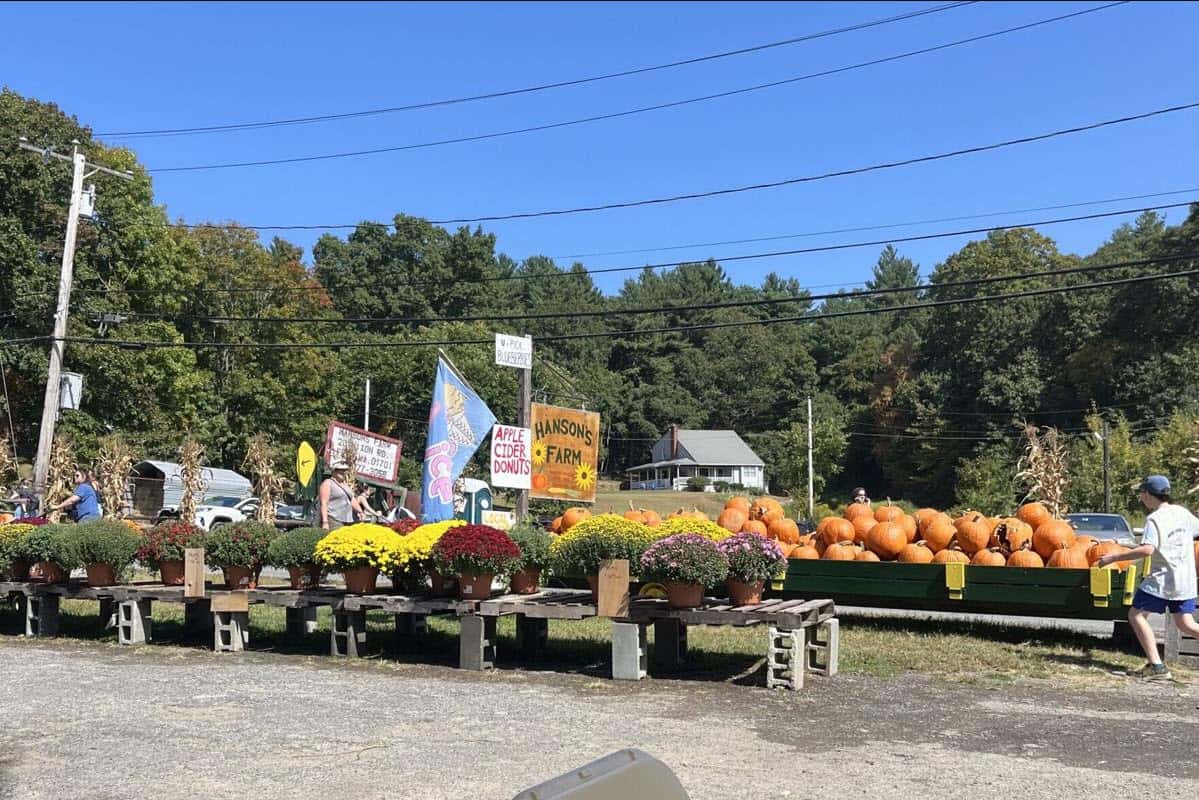
Lawmakers expanded that framework in a 2024 law by allowing farms to process and sell goods made from their own products — such as turning strawberries into jam or milk into ice cream — while retaining farmland tax status.
The new bill (S 3029) builds on those advances, going a step further into exempting agritourism from local zoning oversight, as it has become a growing sector many farms rely on to stay afloat.
“You can grow apples, you can make apple wine, you can sell apple wine, and you can have an apple wine tasting,” Comerford said. “You can grow corn, you can make corn pudding or corn fritters… and you can have a corn maze. It extends what farmers are able to call farming.”
The shift reflects a broader reality: many farms operate on slim or negative margins and depend on diversified revenue streams.
Proposed Constitutional Changes to Farmland Definition
At the same time, Comerford is pushing a longer-term change that would go further than statute — amending the state constitution to redefine farmland itself.
Current constitutional language requires at least five contiguous acres to qualify for agricultural tax benefits, a threshold she said no longer reflects modern land use.
“So right now, the Constitution says that ag land is five acres or more. Now that’s bananas, right? In 2025,” Comerford said.
In a state with shrinking open land, she argued, five acres can be out of reach, especially for urban and smaller-scale farms.
“I mean, think about it, right? Back then,” she said, about the timing of when the state Constitution was ratified in 1780, “five acres seemed like nothing… but now it seems like everything.”
Comerford was clear the proposed amendment will not advance this session.
“We’re going to be back at it next session to change the constitution,” she said.
The Joint Committee on Revenue recommended last year that the Senate version of the amendment should move forward, and awaits a House-Senate session known as a Constitutional Convention for action. That committee also gave a favorable report to a similar measure in 2023, but top Democrats opted against putting the measure up for a vote.
Comerford said the issue is “complex, because farmers and growers want to know that we’re not going to come in and somehow infringe on them or encroach on them, if we don’t have the constitutional protections. But I think we’re going to get there. It’s a big idea to change the constitution. So we need to work on that big idea next session.”
She added that it would help to know how many small farms could benefit from the change.
Data Tracking and Farmland Loss Concerns
That need for better data is a central feature of the bill passed Wednesday, which directs the Massachusetts Department of Agricultural Resources to create a comprehensive registry and mapping system of farmland.
“This bill is an homage to, like, the bowels of farms,” Comerford said, describing new requirements to track land use, solar development, and the flow of local food through state programs.
“You can’t fix something you can’t measure right?” she added.
Comerford said that between 2017 and 2022, 27,000 acres of farmland were lost in Massachusetts. “That’s twice the national rate. Boom gone.”
Food Access Programs and Supply Chain Focus
Beyond tax policy and planning, the bill includes a wide range of food system provisions.
It makes permanent the Food Security Infrastructure Grant Program and newly allows farmers to use grant funding to purchase used equipment.
The legislation also codifies the Healthy Incentives Program, which provides financial support for low-income residents to buy locally grown produce, linking farm viability with food access.
Senators also included provisions affecting cranberry growers, including changes to allow water management permits to be transferred, easing transitions as operations are sold or retired.
The bill creates a “Next Generation Farmer” program aimed at helping new and underrepresented farmers enter the industry.
“And they’re disproportionately young, disproportionately people of color, who have been denied access to the land — immigrant farmers,” Comerford said.
Additional sections require state agencies to track how much local food is used in public programs like schools and food banks, with the goal of strengthening in-state supply chains.
During Senate debate, Comerford emphasized that the bill is not the final word on agricultural policy.
“Another good idea from our colleague,” she said, about an amendment put forward by Sen. Bruce Tarr related to farm stands. “And I’m enjoying this conversation because it allows… the Senate to understand that while the bill before us is a good, big old bill, there’s more we can and should do for farms.”
