Triple-I: Colorado State’s 2026 Atlantic Hurricane Forecast Calls for ‘Somewhat Below Average’ Season
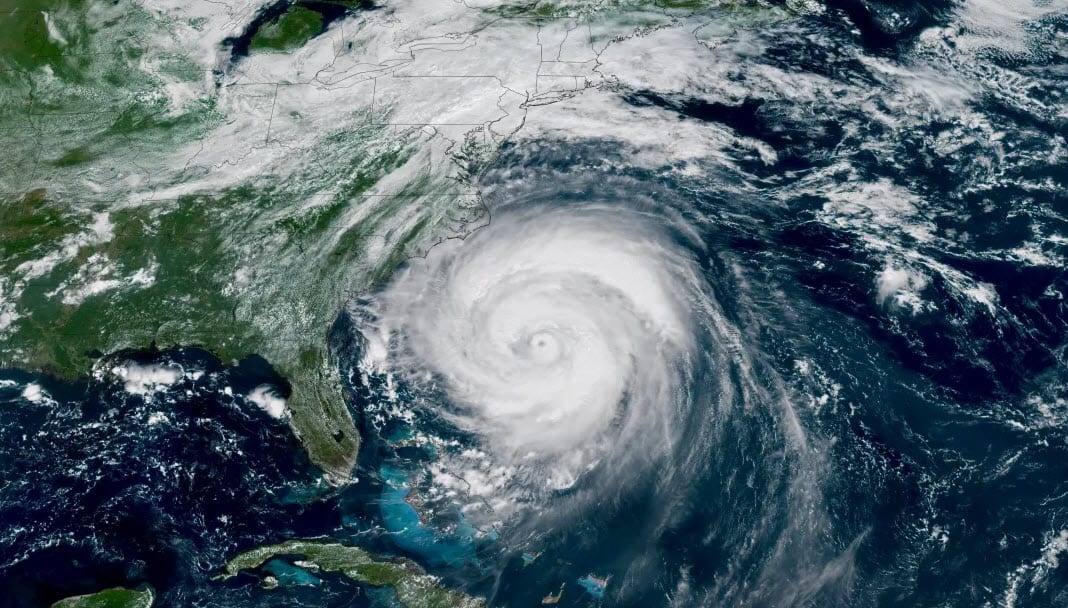
With the arrival of the 2026 Atlantic hurricane season in June, two new forecasts from the Insurance Information Institute (Triple-I) and AccuWeather predict a slightly below-average hurricane season with the potential for a moderate/strong El Niño in 2026.
On April 9th, the Triple-I published a forecast led by CSU senior research scientist Phil Klotzbach, Ph.D., a non-resident scholar at the Insurance Information Institute (Triple-I) for the upcoming 2026 Atlantic hurricane season. The research team forecasts 13 named storms, six hurricanes, and two major hurricanes during the 2026 season, which starts on June 1 and continues through Nov. 30.
“At this point, we are anticipating a moderate/strong El Niño for the peak of the Atlantic hurricane season,” Klotzbach said. “Typically, El Niño reduces Atlantic hurricane activity via increases in vertical wind shear. Water temperatures in the tropical Atlantic are near average. We consequently do not anticipate tropical Atlantic water temperatures being as strong of a hurricane-enhancing factor as they were the past few years when water temperatures were much warmer than average in the tropical Atlantic.”.
According to the CSU team, the 2025 Atlantic hurricane season was above normal, as measured by the number of major hurricanes and Accumulated Cyclone Energy (ACE). Overall, the 2025 season featured 13 named storms, 5 hurricanes, and 4 major hurricanes. Major hurricanes are defined as those with wind speeds reaching Category 3, 4, or 5 on the Saffir-Simpson Hurricane Wind Scale.
The Triple-I noted that the most significant hurricane of the 2025 Atlantic season was Hurricane Melissa, which made landfall as a Category 5 major hurricane in Jamaica, resulting in nearly $9 billion in damage in Jamaica and causing 95 fatalities across the Caribbean
Accuweather: 11-16 name storms predicted during 2026 Atlantic hurricane season
Concurring with the Triple-I-Colorado State forecast, online weather platform AccuWeather is also predicting a lower storm count with 11 to 16 named storms this season.
The biggest development of the year, says AccuWeather, will be a developing El Niño, which will likely be one of “the biggest forces shaping the 2026 Atlantic hurricane season,” and the main reason for the below-average storm prediction.
“It’s very important that everybody from South Texas all the way to Maine prepares equally for each and every hurricane season, regardless of what the official forecast is,” AccuWeather Lead Hurricane Expert Alex DaSilva said. “Even if it’s expected to be a slightly below average hurricane season, we can still see major hits across the United States.”
A case in point is the 1992 hurricane season. While there were only seven named storms during that year, one of them was Hurricane Andrew, considered one of the most powerful hurricanes ever to hit the U.S.
What will be the Atlantic Hurricane Names for 2026?
The National Oceanic and Atmospheric Administration (NOAA) says the practice of naming storms can be dated to the end of the 19th century, when Clement Wragge, an Australian meteorologist, began assigning names to tropical cyclones. First using letters of the Greek alphabet, he then transitioned to Greek and Roman mythology, eventually progressing to feminine names. Fast forward to 1953, the United States Weather Service began using female names for storms. After ending that practice in 1978, the U.S. weather service began using both men’s and women’s names in the Eastern North Pacific storm lists. In 1979, that practice was extended to Atlantic and Gulf of Mexico storms.
According to NOAA, using short, distinctive names improves the speed and accuracy of communication compared with naming storms by latitude-longitude identifiers, particularly when coordinating information across multiple locations and during multiple simultaneous storms. The standardized naming system, developed and agreed upon internationally through the World Meteorological Organization and maintained in part by the National Hurricane Center, reduces confusion, prevents miscommunication, and reflects the global nature of hurricane tracking.
The National Hurricane Center is responsible for naming storms in the Atlantic Basin west of 30°W. However, if a storm intensifies into a tropical storm, the Center is responsible for assigning it a name from one of the six lists below. According to the NOAA, a separate set is used each year, beginning with the first names. After the sets have been issued, they will be reused to name storms in the future. For example, the 2023 names set will be used again in 2029. If there are more storms than names in a given year, a supplemental names list is used.

According to the NOAA, an average hurricane season contains 14 named storms, seven hurricanes, and three major hurricanes.
National Hurricane Preparedness Week started on Sunday, May 3, and continues through Saturday, May 9th
Spearheaded by the National Oceanic and Atmospheric Administration (NOAA), this year’s National Hurricane Preparedness Week starts on Sunday, May 3, and continues through Saturday, May 9.
“During National Hurricane Preparedness Week, everyone who lives in a hurricane-prone community should take a few moments to ensure they have adequate financial protection for their property and possessions, while also taking steps to make their home or business more resilient to the impacts of wind and water,” noted Triple-I CEO Sean Kevelighan in a Triple-I release promoting this week.
“History has proven states along the Gulf and East coasts face the prospect of catastrophic, hurricane-caused property damage. With more Americans living in harm’s way than ever before, it is critical for everyone residing in a hurricane-prone community to make preparedness a priority for the upcoming season,” he added.